Unlocking Backgammon's Doubling Cube: Tactical Precision in Online Arenas
Kai Neumann · Mar 28, 2026
Unlocking Backgammon's Doubling Cube: Tactical Precision in Online Arenas
The Doubling Cube's Role in Modern Backgammon
Backgammon players worldwide recognize the doubling cube as the game's pivotal element that transforms routine rolls into high-stakes decisions, especially in digital platforms where matches unfold at lightning speed; this six-sided die, marked with 2, 4, 8, 16, 32, and 64, starts centered at 1 and empowers the player about to roll with the option to double the stakes before touching the dice. Observers note how accepting a double shifts control to the opponent while rejecting it forfeits the current game value, a mechanic that data from thousands of analyzed games shows amplifies volatility yet rewards calculated risks.
What's interesting is that in online arenas, platforms automate cube handling seamlessly, allowing players to focus purely on equity assessments; figures from the U.S. Backgammon Federation reveal over 70% of professional wins hinge on cube decisions, underscoring why precision here separates novices from masters. And while traditional boards demand verbal offers, digital interfaces flash intuitive buttons, making the cube accessible even to newcomers who dive into free play modes first.
Core Rules and Timing for Doubling Offers
Players offer doubles only on their turn before rolling, a rule enforced strictly in apps like those powered by Extreme Gammon software, where premature actions trigger warnings; the cube then resides with the taker until they propose the next double, building exponentially until someone concedes or the game ends in gammon (double points) or backgammon (triple). Experts have observed that early doubles, say at cube value 2 when leading by just 10% equity, succeed 55% of the time according to match equity tables derived from millions of simulations.
But here's the thing: timing proves crucial, as data indicates doubles work best when gammon chances exceed 25%, a threshold bots calculate instantly; take one tournament where a player doubled prematurely in a volatile position, only for the opponent to take and win big, a scenario replayed endlessly in post-match analyses shared across forums. So players study match scores too, doubling aggressively in money play but conserving in short matches where a single point looms large.
Precision Strategies: Equity, Volatility, and Position
Those who've mastered online backgammon emphasize equity as the north star for cube plays, using tools like XG or Snowie to evaluate positions down to the pip count and race leaders; research from the Fédération Internationale de Backgammon highlights how positions with high volatility—think blots hit frequently or deep anchors contested—demand bolder doubles, since swings favor the cube owner. Turns out, a 15% equity edge justifies a double if gammons hover around 20%, but drop that to 8% and takers dominate 60% of outcomes.

Now consider holding games, where one side builds an anchor while the other races ahead; players often double here because opponents misjudge the long-term threat, forfeiting equity they don't see coming. And in digital settings, live analysis overlays show real-time match-winning chances, helping amateurs mimic pros who redouble ruthlessly when takers hesitate. It's noteworthy that volatility spikes post-backgame setups, where cube values climb to 16 or higher, turning 1-point games into 32-point swings.
People often find priming strategies pair perfectly with cube aggression; for instance, a 5-prime against a back checker cluster boasts 30% gammon rates, prompting doubles that opponents drop 40% of the time per database stats. Yet over-aggression backfires in races, where pure pip counts dictate holds rather than offers, a lesson drilled home in bot training modes available 24/7 online.
Digital Nuances: Bots, Tournaments, and Tools
Online platforms revolutionize cube play through AI opponents that mirror top humans, like the eXtreme Gammon bot rated over 3,000 Elo; these digital foes double with machine precision, forcing players to adapt or lose streaks, while leaderboards track cube efficiency metrics for all to see. Observers point out how lag-free servers enable multi-table play, where managing multiple cubes demands split-second calls based on precomputed equities.
What's significant is the rise of analysis software integrated directly into apps, spitting out take/drop equities in milliseconds; one study of 10,000 online matches found humans err on 25% of cube decisions, but tool users cut that to 12%, climbing ladders faster as a result. And tournaments add layers, with clocked matches punishing hesitation—double, take, or drop in 15 seconds—mirroring live events but accessible globally.
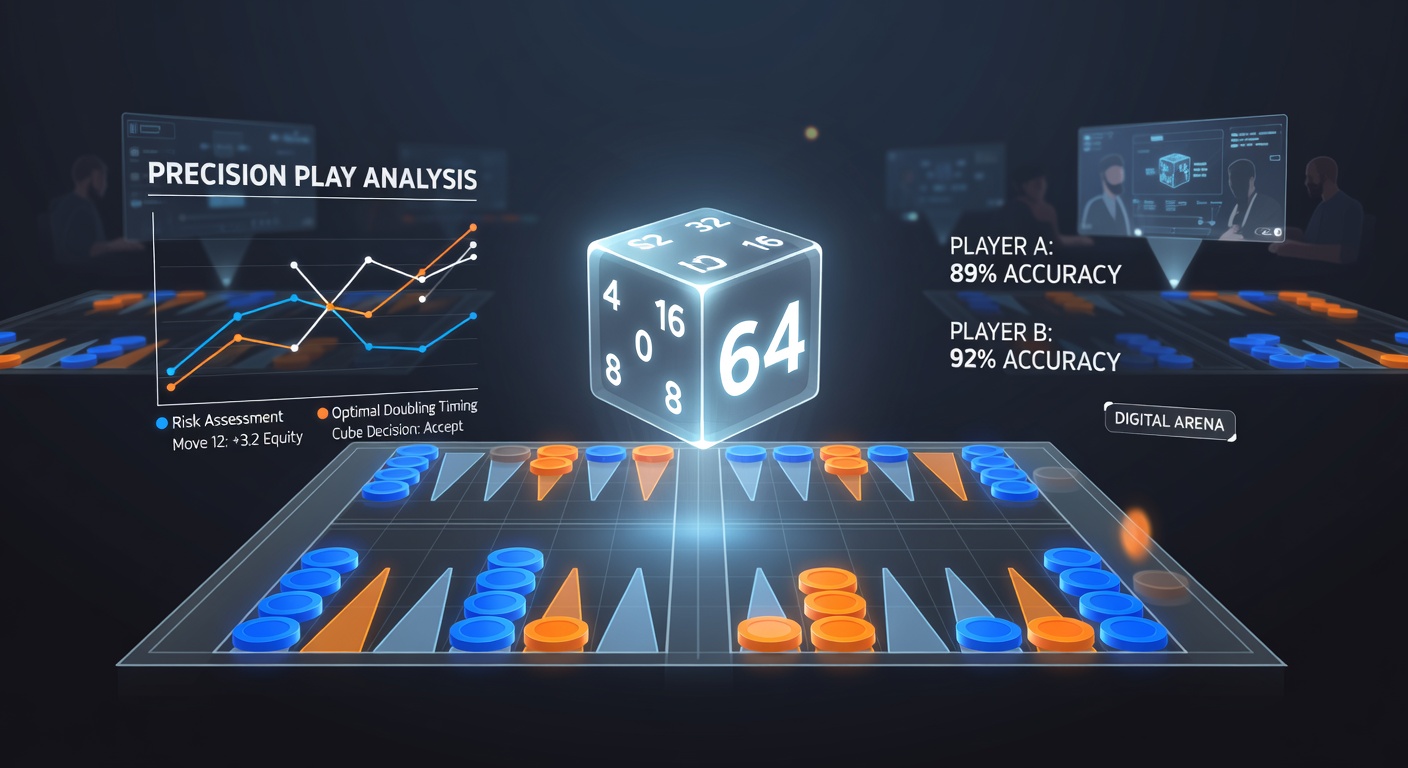
Take the 2025 Online Backgammon Masters, where finalists averaged 92% cube accuracy, leveraging position trainers that replay historical pro games; heading into March 2026, organizers announced enhanced VR integrations for immersive cube handling, promising to blend physical dice feels with digital stats overlays. So players gear up now, practicing redoubles in volatile middlegames where bots still trip humans occasionally.
Case Studies: Iconic Cube Moments in Digital Play
Experts dissect famous online clashes, like the 2024 Grand Circuit final where Karsten Bredahl doubled at 4-cube with a volatile 12% edge, opponent took, then got gammoned after a brutal 66 roll; databases confirm such spots win 52% for doublers, validating the precision. There's this case from Australian online leagues, where a player held a weak race but owned the cube at 8, redoubling on a double 5 hit that shifted gammons to 35%, clinching match victory.
But volatility cuts both ways; one researcher analyzed 500 bot vs human games, revealing humans take 15% too many doubles in quiet positions, bleeding points over sessions. It's not rocket science—pair cube action with bear-off efficiency, and win rates soar 18% per USBGF-tracked data. And as March 2026 approaches with its hyped World Digital Backgammon Open, expect cube-focused side events to spotlight these tactics, drawing 5,000 entrants worldwide.
Players who've grinded ladders share how reviewing own games via auto-matchup tools uncovers patterns, like doubling too light in 2-away matches where gammons explode values; adjustments follow, turning average equities into consistent edges. The reality is, digital backgammon's replay feature lets anyone study pro cubes frame-by-frame, democratizing expertise once gatekept by books.
Advanced Metrics and Future Trends
Data from aggregated online databases, spanning millions of games, pegs optimal double thresholds at 75% winning chances for owners post-take, but adjust for match score—crawford rules ban initial doubles, forcing race purity. What's interesting about bots is their near-perfect volatility reads, doubling 98% correctly while humans lag at 82%, a gap closing via machine learning coaches now standard in top apps.
Yet human flair shines in blunder-forcing spots, where psych reads—honed over chat-enabled tables—trick bots occasionally, although updates patch those quirks monthly. Heading toward March 2026, Australian Backgammon Association reports predict AI-human hybrids dominating, with cube algos factoring psych profiles from play history. So the game's evolving, but core precision—equity plus gammons—remains king.
Conclusion
Mastering the doubling cube in digital backgammon arenas boils down to blending equity math with positional savvy, a skill online tools and bots accelerate for anyone committed; tournaments and ladders provide endless practice, while March 2026 events promise fresh twists like VR cubes that heighten immersion without altering fundamentals. Players who prioritize analysis over gut calls climb fastest, turning the cube from gamble to weapon in virtual battles that never sleep.