Threshold Analysis in Digital Backgammon: Conservative Anchors Versus Aggressive Cubing Approaches
Kai Neumann · May 30, 2026

Threshold Analysis in Digital Backgammon: Conservative Anchors Versus Aggressive Cubing Approaches
Digital backgammon formats present players with distinct decision points where defensive positioning meets opportunities for cube escalation, and observers note that these moments often hinge on board structure, pip counts, and match scores rather than random chance alone. Research from academic sources shows that conservative anchoring strategies rely on establishing secure points in the opponent's home board to restrict checker movement, whereas aggressive cubing involves offering or accepting doubles at equity thresholds calculated through rollout data and neural network evaluations.
Core Elements of Anchor-Based Defense
Conservative play in backgammon centers on holding anchors that create barriers against advancing checkers, and data from platform analytics indicates that players maintain these positions longer when trailing in a match or facing high volatility in dice sequences. Those who've studied online match logs find that anchors on the 20-point or 21-point provide structural advantages by limiting opponent escapes, yet they require precise timing to avoid becoming liabilities once the opponent clears key points. Figures reveal that in automated simulations, holding an anchor past the midpoint of a game correlates with reduced gammon losses, although it also extends game length across both money play and tournament settings.
Cube Escalation Patterns in Virtual Matches
Aggressive cubing tactics emerge when equity calculations support double offers that pressure opponents into difficult take or drop decisions, and industry reports confirm that modern interfaces display live equity percentages to guide these choices. Players often encounter these thresholds during bear-off phases or when one side gains a racing lead combined with board control, leading to cube actions that double or redouble stakes mid-match. What's interesting is how digital formats standardize these decisions through built-in analyzers, allowing consistent application of thresholds derived from millions of simulated games rather than intuition alone.
Mapping the Transition Points Between Strategies
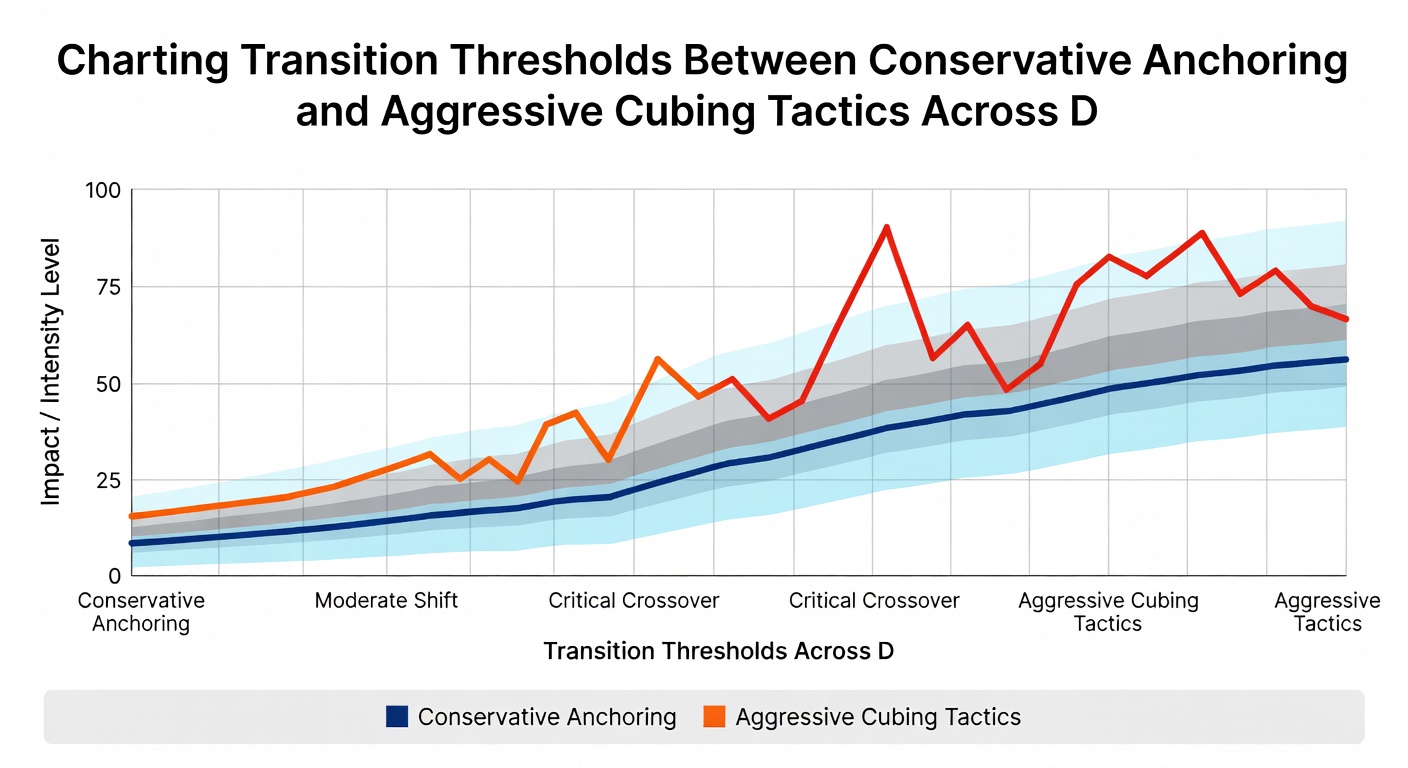
Transition thresholds appear most clearly when board development shifts from containment to racing dynamics, at which point observers note that continued anchoring may yield lower expected value than cube aggression. Experts have observed that the shift typically occurs around specific pip count differentials, such as when the trailer closes a gap to within 20 pips while holding a viable anchor, prompting reevaluation of cube leverage. According to studies compiled by the European Gaming Association, software logs across multiple platforms show players who delay cube action past these points experience measurable equity drops, whereas timely aggression aligns outcomes more closely with mathematical models. Nevada Gaming Control Board equity studies further document how these thresholds vary by format, with real-time money games favoring earlier doubles compared to longer match structures.
Format-Specific Variations in Digital Environments
Online platforms differentiate themselves through rule sets that affect transition timing, including variations in match lengths, automatic resignation features, and integrated probability displays. Data indicates that shorter formats accelerate the move toward aggressive cubing because limited games reduce the value of prolonged anchor holds, while extended matches reward patience until clear racing advantages emerge. Researchers discovered through cross-platform comparisons that interfaces with detailed rollout histories encourage earlier recognition of thresholds, leading to higher cube activity rates overall. Those who've examined tournament data from organizations like the World Backgammon Federation note that digital qualifiers often exhibit faster strategy shifts than live events due to the availability of instant analysis tools.
Additional distinctions arise in money game versus tournament settings, where the former permits freer cube aggression without match-score constraints, and the latter introduces gammon and backgammon equities that recalibrate thresholds dynamically. Platform statistics compiled in May 2026 updates demonstrate that users in hybrid formats blending both styles show intermediate behaviors, blending anchor retention with selective doubling based on real-time equity readouts.
Practical Threshold Identification Across Interfaces
Players identify transition moments through a combination of board visualization and equity metrics, and evidence suggests that consistent monitoring of these indicators improves decision accuracy over repeated sessions. When an anchor begins losing effectiveness against an advancing prime or when a race becomes viable, the balance tips toward cube offers that capitalize on the opponent's potential errors. Academic papers from research institutions highlight how machine learning models trained on extensive match databases pinpoint these moments with increasing precision, offering benchmarks that human players can reference during live play.
Conclusion
Digital backgammon continues to evolve through refined analytics that clarify the boundaries between anchoring defense and cubing offense, providing structured pathways for strategy adjustments based on verifiable equity data. As formats diversify and tools advance, the documented thresholds serve as reference points that guide play without replacing individual judgment in each unique position.