Mathematics Behind House Edge Calculations in Simulated Multi-Player Table Settings
Elena Berger · Jun 18, 2026
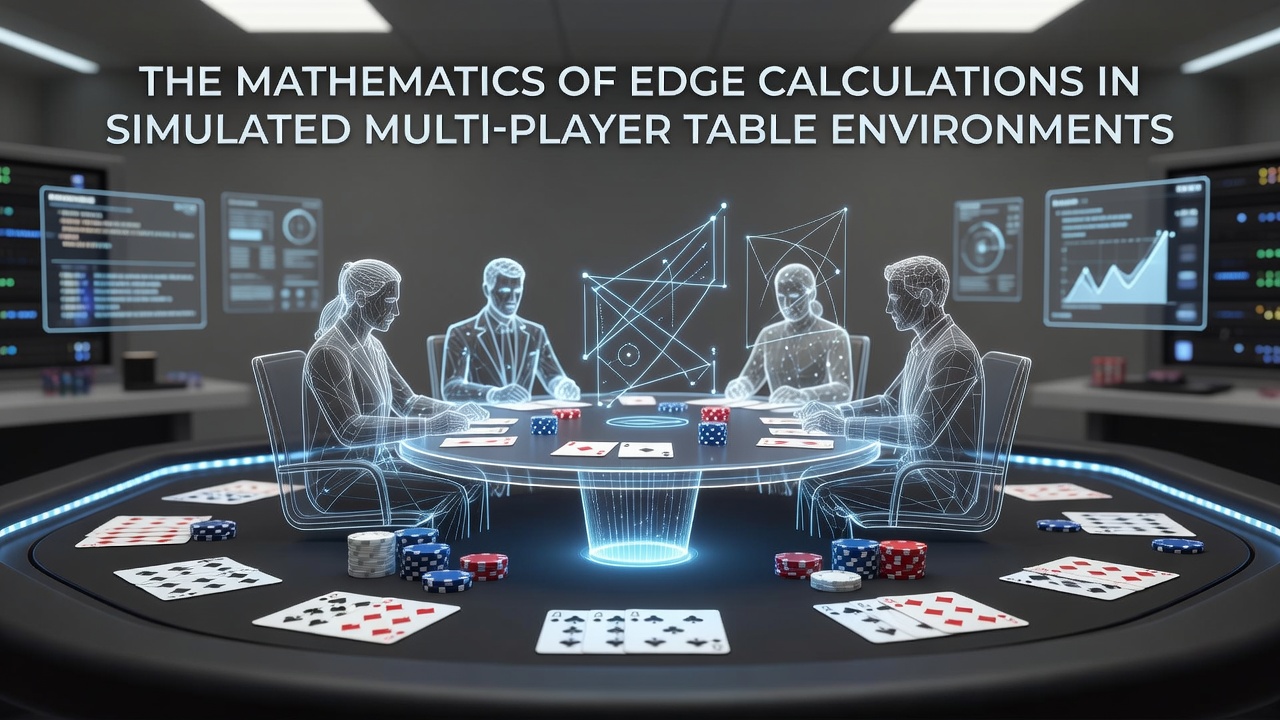
Mathematics Behind House Edge Calculations in Simulated Multi-Player Table Settings
Simulated multi-player table environments rely on complex probability models to determine the house edge, which represents the mathematical advantage built into each game variant. These simulations replicate real-world table dynamics where multiple participants interact with a virtual dealer through random number generators and algorithmic sequences. Data from industry reports shows that accurate edge calculations require factoring in variables such as deck composition, player decisions, and payout structures across numerous rounds.
Core Formulas Driving Edge Determinations
Researchers apply expected value equations to compute the house edge by subtracting the average player return from the total wagered amount. In multi-player setups the formula expands because simultaneous actions from several participants influence shared elements like card distribution and betting rounds. For instance in simulated blackjack environments the calculation incorporates the probability of dealer busts alongside player-specific strategies such as hitting or standing which alters outcomes across the table. Studies indicate that Monte Carlo methods simulate thousands of hands to refine these figures and reveal how small changes in rules shift the overall percentage by fractions of a point.
Multi-player interactions add layers since one participant's choice can affect remaining cards available to others in the simulation. Analysts use combinatorial mathematics to account for this by enumerating all possible card sequences and weighting them according to frequency. This approach ensures the edge reflects realistic play patterns rather than isolated single-player scenarios.
Impact of Simulation Parameters on Accuracy
Simulated environments adjust parameters like the number of decks, reshuffle points, and betting limits to mirror physical tables while scaling for online volumes. Evidence from gaming research demonstrates that increasing player count in these models slightly modifies the edge because collective decisions accelerate deck depletion and change variance rates. Software tools run iterative loops to test edge stability under different conditions and observers note that results stabilize after millions of simulated hands.
Case Examples from Table Variants
Take European roulette simulations where the presence of multiple players does not alter the core edge yet affects session flow through simultaneous bet placements. Calculations factor in the zero pocket alongside even-money payouts to yield a consistent 2.7 percent advantage. In contrast poker variants in multi-player simulations emphasize pot odds and rake percentages where edge derives from player versus player dynamics rather than direct house involvement. One analysis of Texas Hold'em environments revealed that mathematical modeling of hand rankings across eight seated participants produces edges ranging from 2 to 5 percent depending on blind structures and tournament formats.

Blackjack remains a focal point because basic strategy charts derive directly from edge computations that account for multi-player card visibility. When simulations incorporate side bets or surrender options the formulas incorporate conditional probabilities that adjust for information gained from other players' hands. Figures from academic sources confirm these adjustments can reduce the house edge below 1 percent with optimal play yet rise above 2 percent without it.
Recent Developments in Modeling Techniques
By June 2026 advancements in computational power allowed for more granular simulations that include real-time player behavior data from licensed operators. Regulatory bodies in regions such as Nevada and Australia have examined how these models inform compliance testing for fairness in digital table products. Industry organizations report that enhanced algorithms now integrate machine learning to predict edge fluctuations caused by varying participation levels during peak hours.
What's interesting is how geographic differences influence modeling priorities. Canadian research institutions have focused on variance metrics in multi-player baccarat simulations while European studies emphasize payout ratio consistency across jurisdictions. This diversity in approach helps refine global standards for simulated environments without relying on any single regulatory framework.
Challenges in Maintaining Calculation Precision
Precision suffers when simulations overlook correlations between player actions and random outcomes yet modern techniques address this through sensitivity analysis. Experts apply partial derivatives to measure how incremental rule changes affect the edge and data shows these methods identify vulnerabilities in game design before deployment. Multi-player tables introduce additional complexity because network latency in live simulations can skew perceived randomness though developers mitigate this with server-side verification protocols.
And yet the ball remains in the developers' court to validate models against empirical results from actual play sessions. Cross-referencing simulation outputs with historical data sets from multiple operators strengthens reliability and reduces discrepancies that might otherwise appear in isolated tests.
Conclusion
The mathematics of edge calculations continues to evolve alongside simulation technology and provides the foundation for fair multi-player table experiences. Accurate models depend on thorough integration of probability theory, combinatorial analysis, and iterative testing which together deliver consistent results across diverse game types. Observers note that ongoing refinements in these methods support transparent operations while adapting to new computational capabilities and regulatory expectations worldwide.