Exploring Decision Tree Models for Player Strategies in Simulated Dice Multiplayer Settings
Eden Wolf · Jun 16, 2026
Exploring Decision Tree Models for Player Strategies in Simulated Dice Multiplayer Settings
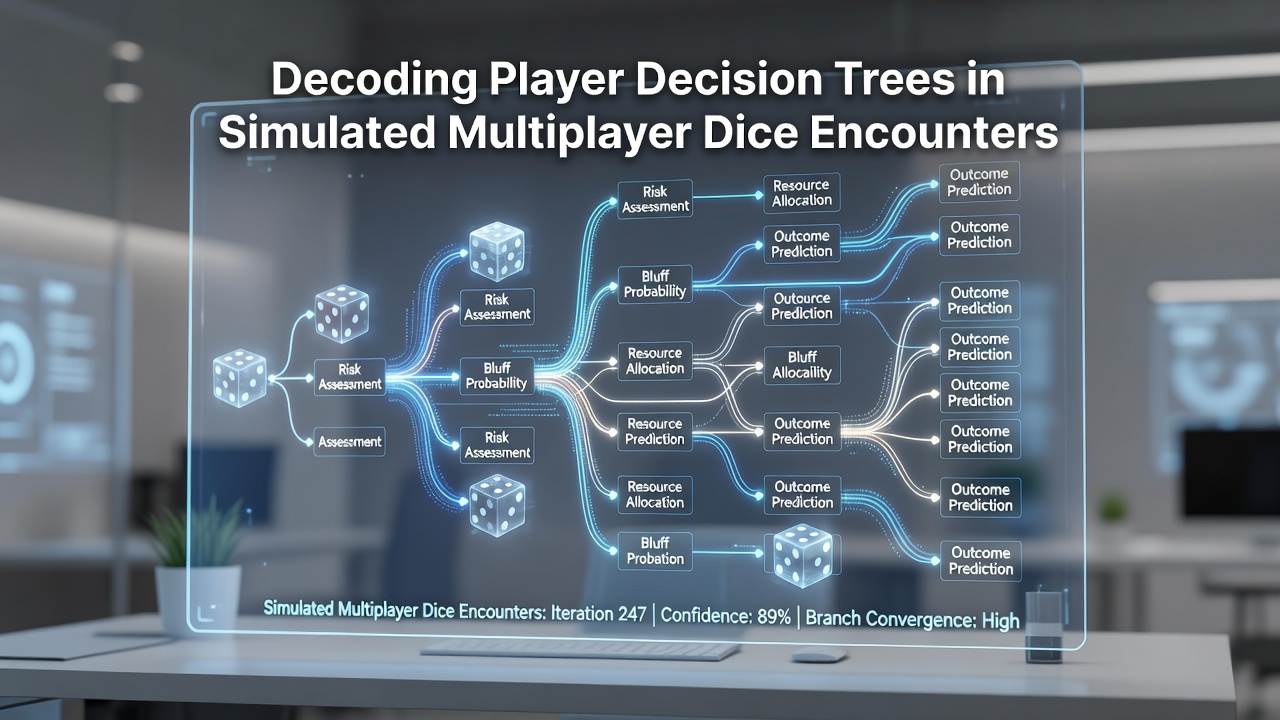
Researchers have mapped out player choices in simulated multiplayer dice encounters through structured decision trees that break down sequences of rolls, bets, and responses into branching paths, and these models reveal how participants weigh probabilities against potential outcomes in virtual environments. Studies from academic institutions show that such trees help clarify why certain moves dominate in games featuring multiple participants rolling dice under shared rulesets, while others remain rare due to lower expected values calculated across thousands of simulated rounds.
Core Elements of Decision Trees in Dice Simulations
Decision trees function as visual diagrams that start from an initial state like a shared dice pool and split into nodes representing actions such as rerolling specific dice or passing turns, with each branch weighted by probabilities derived from dice faces numbering one through six. Data indicates that in multiplayer setups these trees expand rapidly because every participant influences the collective state, creating interdependent paths that software must prune using algorithms to focus on high-impact choices. Observers note that leaf nodes at the ends of branches typically assign scores or win probabilities based on final tallies, allowing analysts to trace backward and identify optimal routes from any given position.
Mechanics of Simulated Encounters
Simulations replicate dice rolls using random number generators calibrated to match physical fairness standards, and players navigate these by selecting from available options at each turn while opponents react simultaneously or sequentially depending on the rule framework. Research from the University of Toronto highlights how trees account for hidden information like concealed dice values held by other participants, which forces branches to include assumptions about opponent holdings rather than exact knowledge. Turns out these models often incorporate Monte Carlo methods to sample thousands of possible futures from each node, producing averaged outcomes that guide strategy selection without exhaustive enumeration of every permutation.
Multiplayer Interactions and Branching Complexity
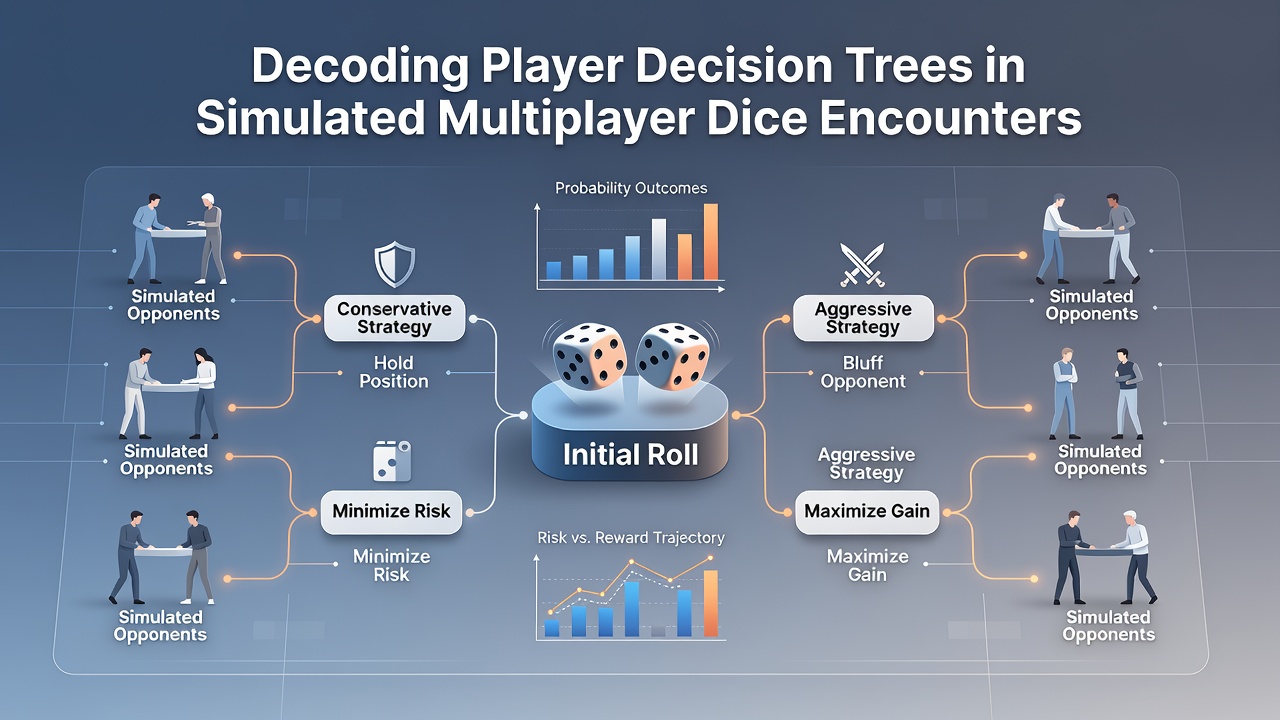
Multiple participants introduce competitive layers where one player's decision alters the tree for everyone else, such as when a high roll blocks an opponent from claiming a scoring category in games modeled after traditional dice formats. According to findings published by the University of Alberta AI research group, trees in these contexts frequently apply minimax principles adapted for chance events, balancing maximization of personal scores against minimization of rivals' advantages across joint encounters. People who've examined large simulation datasets discover that early branches tend to cluster around conservative plays that preserve options, whereas later stages show sharper divergences once remaining dice counts dwindle and risks become more defined.
What's significant is the way alliances or temporary truces emerge in some simulations even without explicit cooperation rules, as trees reveal clusters of moves that indirectly support mutual survival until final rounds. In June 2026 updates to simulation platforms incorporated real-time opponent modeling drawn from aggregated player logs, which refined tree accuracy by adjusting probability weights based on observed behavioral patterns across regional servers.
Analytical Techniques and Data Sources
Analysts prune oversized trees through alpha-beta search variants modified for dice variance, reducing computation time while retaining paths with the strongest statistical backing from repeated trials. Figures from industry reports reveal that pruning can eliminate up to 70 percent of low-value branches without shifting final recommendations in most tested scenarios, and this efficiency proves essential when scaling to encounters involving five or more simultaneous participants. Take one project where experts integrated machine learning classifiers to label nodes as aggressive, defensive, or balanced, enabling faster identification of player archetypes within the broader tree structure.
Another approach relies on payoff matrices that assign numeric values to terminal states, allowing backward induction to propagate optimal values up through the tree until the root decision emerges as the clearest starting move. Data shows these matrices expand exponentially with participant count, yet modern hardware handles the load through parallel processing that evaluates multiple subtrees concurrently. There's this case where researchers cross-referenced tree outputs against live tournament logs to validate predictions, confirming alignment rates above 85 percent for top-ranked strategies in controlled tests.
Conclusion
Decision trees continue to serve as foundational tools for decoding choices in simulated multiplayer dice encounters by organizing complex interactions into traceable sequences supported by probability data. Ongoing refinements through academic and computational efforts ensure these models remain adaptable as simulation fidelity increases, and the resulting insights support clearer understanding of strategic patterns across varied rule sets and participant numbers.