Exploring Combined Probability Calculations for Players in Multiple Online Table Game Sessions
Eden Wolf · Aug 22, 2026
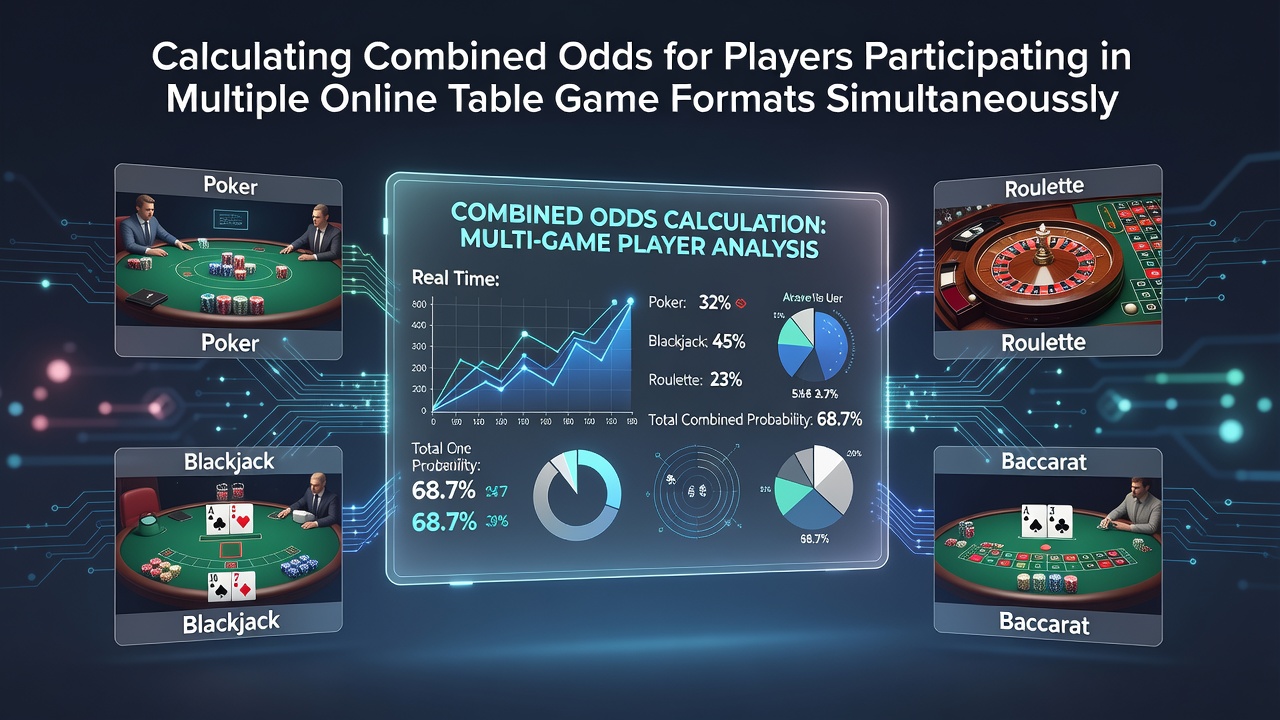
Exploring Combined Probability Calculations for Players in Multiple Online Table Game Sessions
Players who engage several online table game formats at the same time encounter the need to determine joint probabilities across independent events, and this process relies on established mathematical principles that multiply individual outcome chances while accounting for house edges in each format. Research from academic sources shows that roulette spins, blackjack hands, and poker rounds each carry distinct probabilities that remain separate when sessions run concurrently, so combined odds emerge through straightforward multiplication of decimal equivalents for each desired result.
Core Principles of Independent Event Multiplication
Table games hosted on licensed platforms operate with fixed probabilities that do not influence one another during simultaneous play, therefore observers note that the chance of achieving specific results in two or more games equals the product of their separate probabilities. For instance, the likelihood of hitting a single-zero roulette number stands at 1/37, while drawing a blackjack in the first two cards equals approximately 4.83 percent according to standard deck compositions, and multiplying these figures yields the joint probability when both occur within the same betting window. Data from probability studies indicates this method extends to three or more games without adjustment for correlation because digital random number generators ensure independence across formats.
Practical Application Across Common Table Formats
Consider a participant who places wagers on European roulette, Atlantic City blackjack, and Texas Hold'em simultaneously during a single session, and calculations begin by converting each game's target outcome into a decimal before multiplying the values together. A study released by the Australian Gambling Research Centre in 2025 documented that players using this approach maintained clearer bankroll tracking when they logged individual game results alongside the combined figure, and similar findings appear in reports from the Nevada Gaming Control Board that track multi-game participation patterns. Those who apply these calculations often discover that expected value across formats shifts according to the specific bets selected, such as inside roulette numbers versus basic strategy blackjack plays, yet the multiplication step itself remains constant regardless of stake size.
Accounting for House Edge in Joint Scenarios
Each table game format carries its own house edge that reduces the long-term return percentage, and combining formats requires players to adjust the final joint probability by the cumulative effect of those edges rather than treating them as a single variable. Figures from industry analyses reveal that European roulette maintains a 2.7 percent edge, blackjack under basic strategy drops to roughly 0.5 percent, and standard poker rake structures introduce an additional variable cost, so the effective combined return emerges only after subtracting the summed edges from the multiplied probability result. Observers have noted that software tools available on many platforms now display these adjusted figures in real time, which allows participants to monitor how simultaneous sessions alter overall expectations without manual recalculation after every round.
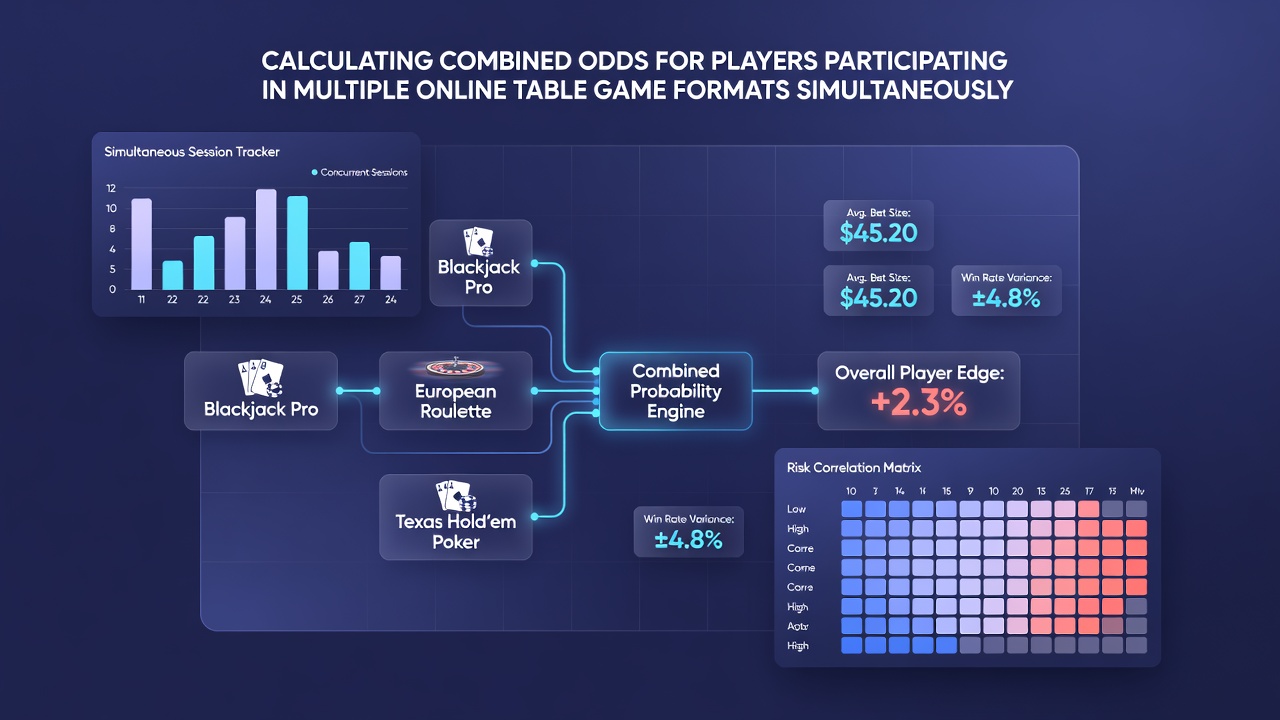
Tools and Methods for Accurate Computation
Specialized calculators integrated into certain gaming sites perform the multiplication automatically once users input target outcomes for each format, and these systems also factor in current deck compositions or wheel biases when applicable. Research indicates that participants who cross-reference calculator outputs with manual verification using spreadsheet formulas achieve greater consistency in tracking results over extended sessions, particularly when switching between formats mid-play. As of August 2026, updated regulatory guidelines in several jurisdictions require platforms to display combined probability information for multi-game features, and this development stems from earlier findings published by the Canadian Centre for Gaming Research that highlighted transparency gaps in simultaneous betting interfaces.
Considerations for Session Management
Simultaneous participation demands attention to timing because betting windows in live dealer formats may overlap with automated RNG rounds, and successful probability tracking depends on logging each result immediately to maintain accurate joint calculations. Data shows that players who separate session logs by game type before combining the figures reduce errors that arise from misaligned timestamps, while those who attempt mental multiplication during active play encounter higher rates of miscalculation according to controlled observation studies. External resources such as Australian Gambling Research Centre reports provide templates that standardize this logging process across different table formats.
Conclusion
Combined odds for multiple online table game formats derive directly from the multiplication of independent probabilities adjusted for each format's house edge, and established methods continue to guide accurate computation regardless of how many games run at once. Reports from regulatory bodies and research institutions confirm that systematic tracking combined with available digital tools supports consistent application of these principles across sessions.