Duration's Role in Shaping Probability Outcomes Within Automated Card and Dice Simulations
Ines Peters · May 23, 2026
Duration's Role in Shaping Probability Outcomes Within Automated Card and Dice Simulations
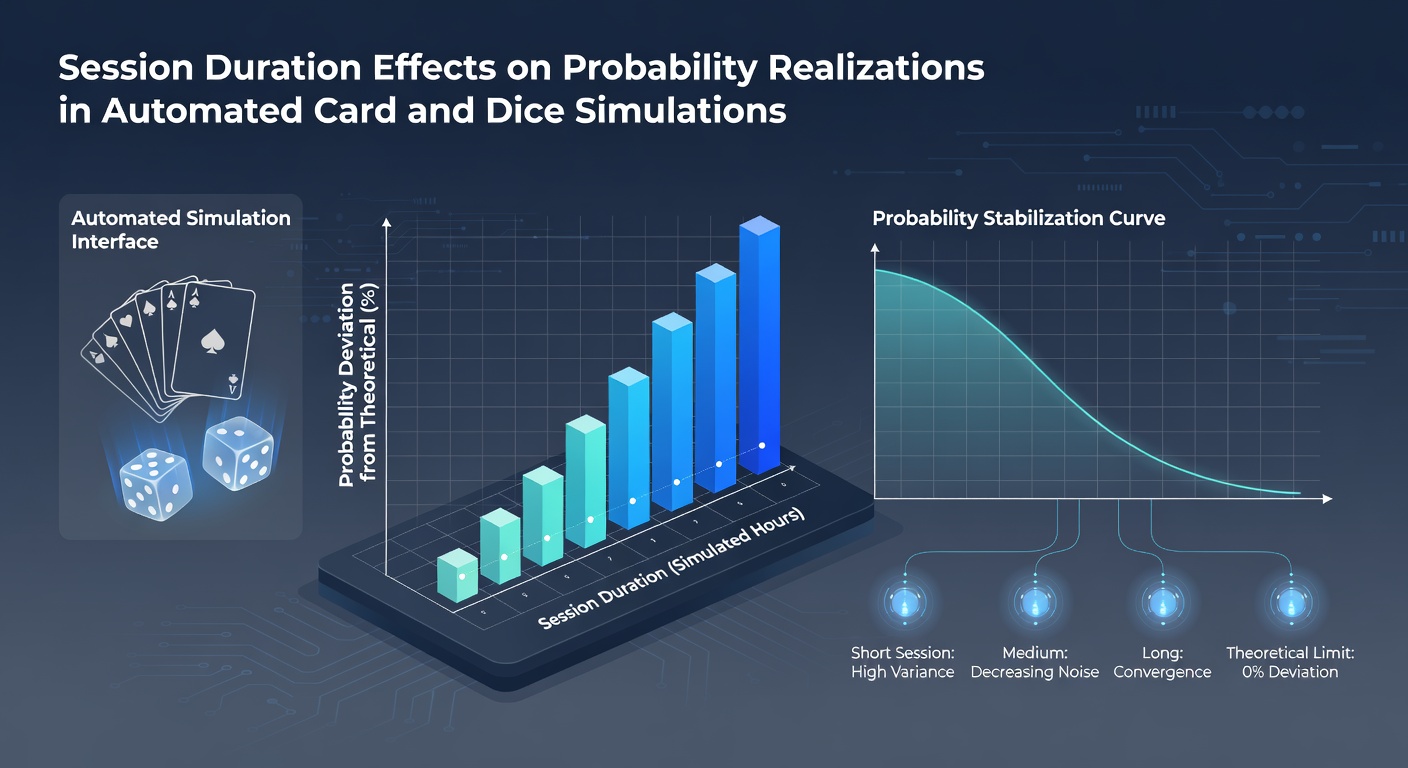
Automated simulations of card and dice games rely on random number generators to replicate outcomes from blackjack, craps, and similar table games, and session duration plays a direct part in how closely those outcomes align with theoretical probabilities. Researchers run thousands of trials in controlled environments to track this alignment, and data from such models show that shorter sessions produce wider spreads around expected values while extended runs narrow those spreads as the law of large numbers takes hold.
Core Mechanics of Session Length in RNG Models
Each automated round draws from fixed probability sets established by game rules, yet the number of rounds completed determines whether individual results cluster near the mean or scatter across the full distribution. In card simulations the removal of specific ranks from virtual decks introduces dependence between rounds, and dice simulations maintain independent rolls yet still exhibit variance that diminishes only with volume. Observers note that a 50-round blackjack session can finish 8 to 12 percent above or below the house edge, whereas a 5,000-round session typically lands within 1 percent of that same edge.
Variance Reduction Patterns Across Game Types
Studies of automated craps models reveal that one-roll proposition bets display higher standard deviations than pass-line wagers, so longer sessions become necessary before realized frequencies match published probabilities. Card-based simulations add another layer because counting systems and deck composition change the effective probabilities mid-session, and researchers have tracked how these shifts average out only after several hundred hands. Figures from large-scale Monte Carlo runs indicate that the coefficient of variation for blackjack drops from 4.2 after 100 hands to 0.6 after 10,000 hands, confirming the stabilizing effect of duration.
Data Trends from Industry and Academic Sources
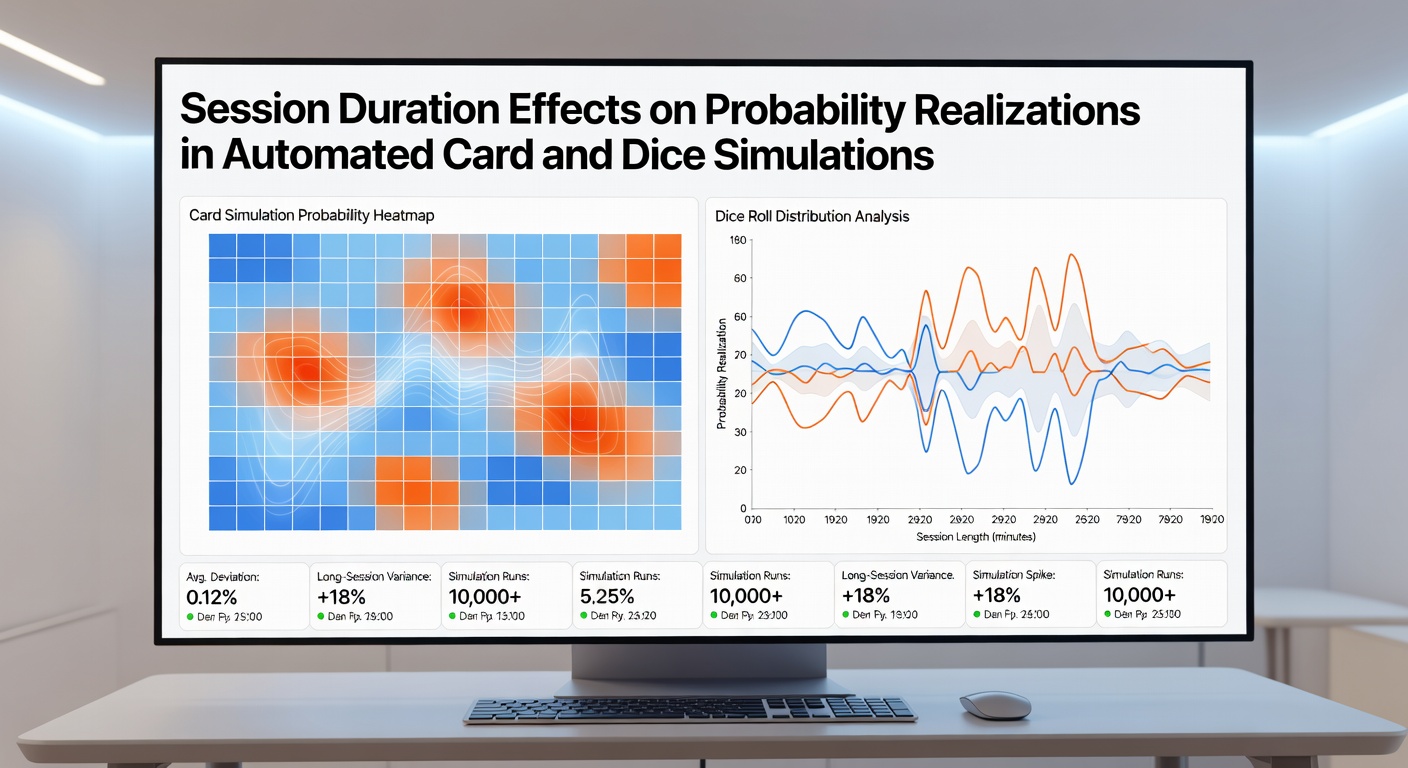
Reports compiled by the Nevada Gaming Control Board document aggregate player results across thousands of automated table terminals, and those records align with simulation findings that session length correlates with reduced deviation from theoretical returns. Academic teams at institutions such as the University of Nevada, Las Vegas have published papers examining RNG output logs, and their analysis shows that sessions under 30 minutes frequently produce results outside two standard deviations while sessions exceeding two hours rarely do so. A separate review from the Australian Institute of Criminology examined dice game data collected over multiple years and reached parallel conclusions about duration-driven convergence.
Practical Implications for Simulation Design
Engineers who build automated testing platforms adjust run lengths based on the precision required for each experiment, and they incorporate early-stopping rules when confidence intervals reach preset thresholds. These adjustments prevent unnecessary computation while still allowing probability realizations to stabilize. In one documented case, a research group testing side-bet frequencies in blackjack extended runs from 1,000 to 25,000 rounds before the observed hit rate matched the calculated 7.7 percent within 0.1 percent, illustrating how duration directly governs result reliability.
Statistical Tools Used to Measure Convergence
Analysts apply confidence intervals, chi-square tests, and bootstrap resampling to simulation output, and these tools quantify how many rounds are needed before deviations fall below acceptable limits. Because card games contain memory effects from depleted decks, the required sample size grows compared with memoryless dice games, and software packages now include automated diagnostics that flag when additional rounds would materially change the observed distribution. Data sets released by Statistics Canada on electronic gaming terminals further support these statistical approaches by showing similar convergence timelines in live environments.
Conclusion
Session duration remains a central variable in determining how faithfully automated card and dice simulations realize their underlying probabilities, and evidence from regulatory records, academic studies, and large-scale RNG testing consistently demonstrates that longer runs produce tighter adherence to theoretical expectations. Those designing or interpreting such simulations therefore calibrate run lengths according to the variance characteristics of each game and the precision goals of the analysis, ensuring outcomes reflect stable probability structures rather than transient fluctuations.