Decision Tree Mapping in Successive Rounds of Digital Card and Dice Games
Ines Peters · Aug 4, 2026
Decision Tree Mapping in Successive Rounds of Digital Card and Dice Games
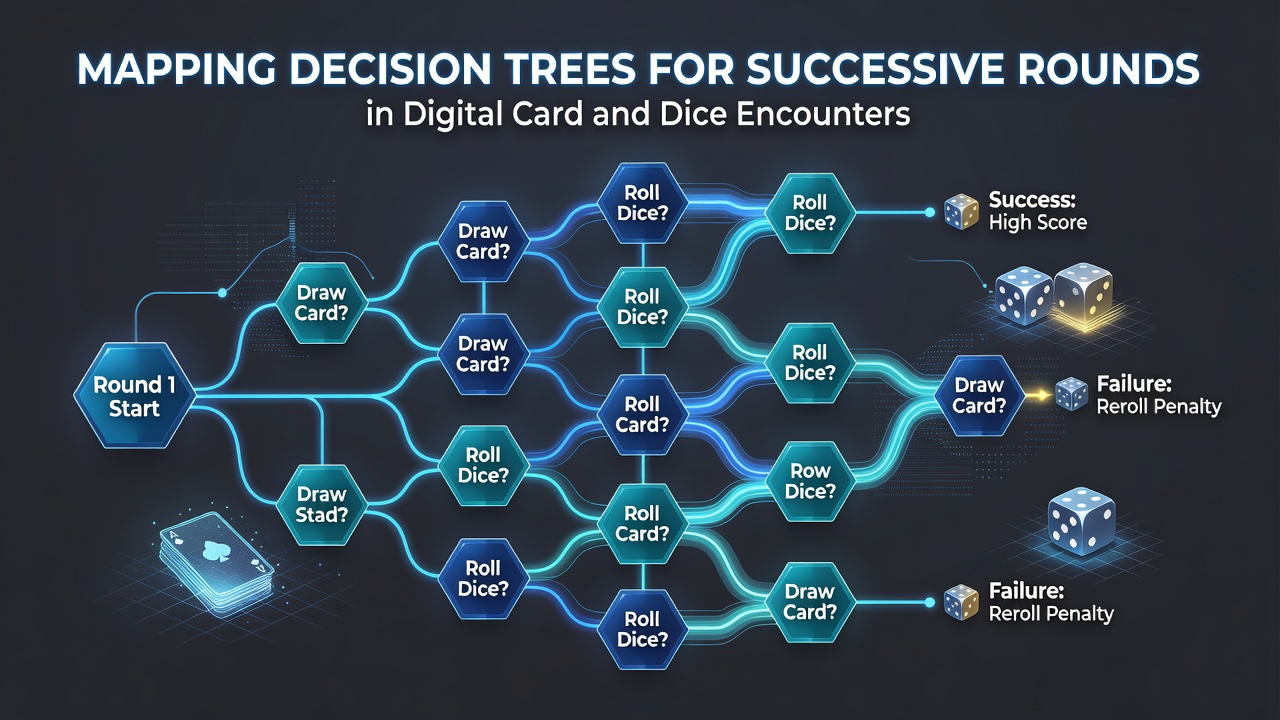
Decision trees provide structured frameworks that map player choices across multiple rounds in digital card and dice encounters, allowing systematic evaluation of options at each stage. Researchers apply these models to games where outcomes depend on prior results, such as poker variants or craps sequences, because each round introduces new probabilities that build on previous decisions. Data from industry reports indicate that such mappings help identify optimal paths while accounting for variables like remaining deck composition or dice roll histories.
Core Elements of Decision Trees in Digital Gaming
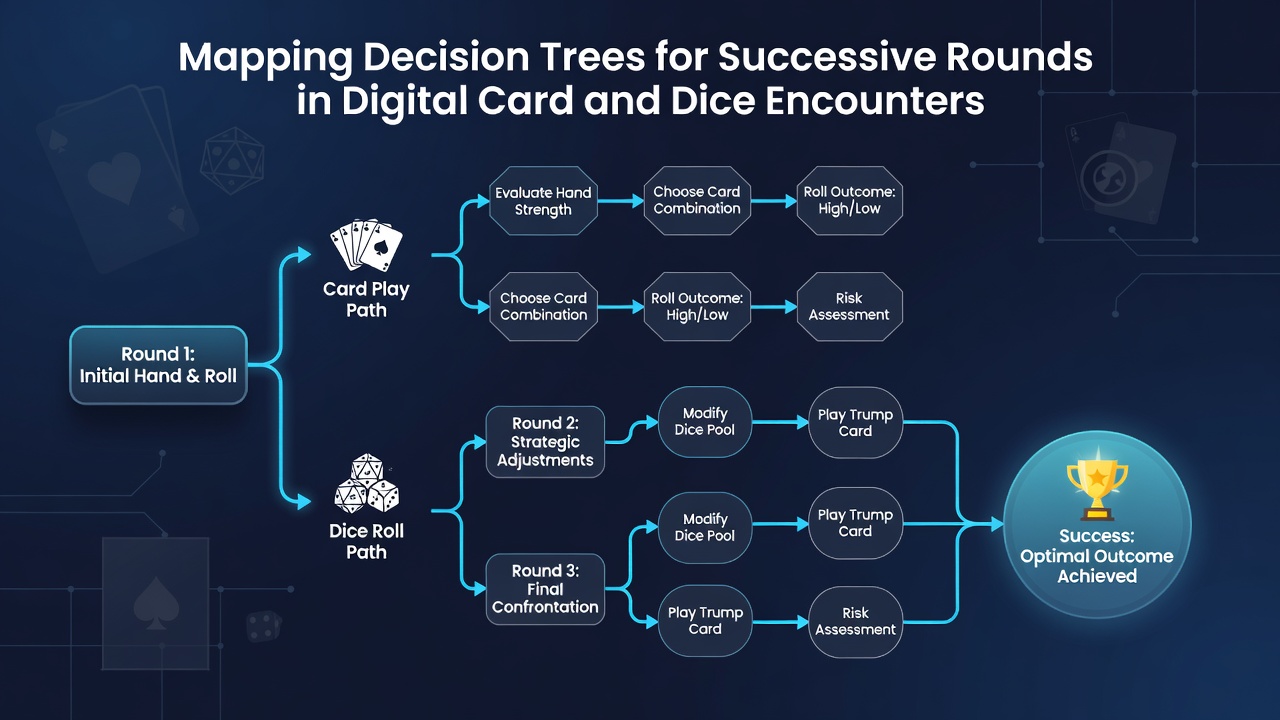
Each node in a decision tree represents a choice point, while branches illustrate possible actions and their associated probabilities. In successive rounds, the tree expands to include states carried over from earlier plays, which creates layered structures that grow exponentially with additional rounds. Observers note that pruning techniques reduce complexity by eliminating suboptimal branches early, and studies from academic institutions confirm this approach maintains accuracy in simulations of card draws and dice outcomes. Those who develop these models often integrate conditional probabilities so that later decisions reflect updated information from prior rounds.
Application to Successive Card Game Rounds
Digital card encounters require trees that track evolving conditions such as known cards, betting positions, and opponent tendencies across hands. Experts have observed that mapping these elements allows systems to simulate thousands of round sequences in seconds, revealing patterns that single-round analysis misses. For instance, one model might branch on whether to draw, hold, or fold based on cumulative odds, while another layer factors in pot sizes that change after each completed round. Research indicates that effective trees incorporate memory of previous results, which proves essential in games where the random number generator maintains consistent rules but player choices alter the effective state.
Extending Models to Dice Encounters
Dice games introduce distinct variables because each roll stands independent yet forms sequences through betting decisions that carry forward. Decision trees for these encounters map wager types, amounts, and continuation choices while weighting outcomes according to the rules of the specific variant. Those who analyze successive rounds find that trees must account for streak probabilities and house edge adjustments that accumulate over multiple plays. In August 2026, updates from regulatory bodies in several jurisdictions prompted developers to refine these models for compliance with new transparency requirements on algorithmic fairness in digital dice simulations.
Implementation Tools and Techniques
Software platforms used by analysts support recursive algorithms that build and evaluate trees dynamically during play sessions. These tools allow integration of real-time data feeds so that branches adjust automatically when new information arrives from completed rounds. People who work with such systems report that visualization features help identify critical decision nodes where small changes in strategy produce measurable differences in long-term results. Academic papers on game theory, including those hosted by institutions like the University of Nevada, Las Vegas, demonstrate how decision trees scale effectively when applied to both card and dice formats in controlled digital environments.
Challenges in Mapping Multi-Round Scenarios
Complexity increases rapidly as the number of rounds grows, which leads developers to employ approximation methods and Monte Carlo sampling to keep computations feasible. Observers note that balancing depth against processing speed remains a key consideration, especially when trees must run on consumer devices or mobile platforms. Evidence from industry analyses shows that incomplete mappings can overlook rare but high-impact sequences, prompting ongoing refinements in pruning criteria and node evaluation functions. Regulatory frameworks in regions outside the UK continue to emphasize verifiable fairness in these computational models.
Conclusion
Decision tree mapping supplies a methodical way to examine choices across successive rounds in digital card and dice encounters. The approach connects individual decisions into coherent sequences that reflect cumulative probabilities and state changes. Continued development in this area draws on contributions from academic research and regulatory guidance, which together support more precise modeling of extended play scenarios.