Algorithms Powering Fairness in Virtual Table Environments
Cameron Baumann · Aug 6, 2026
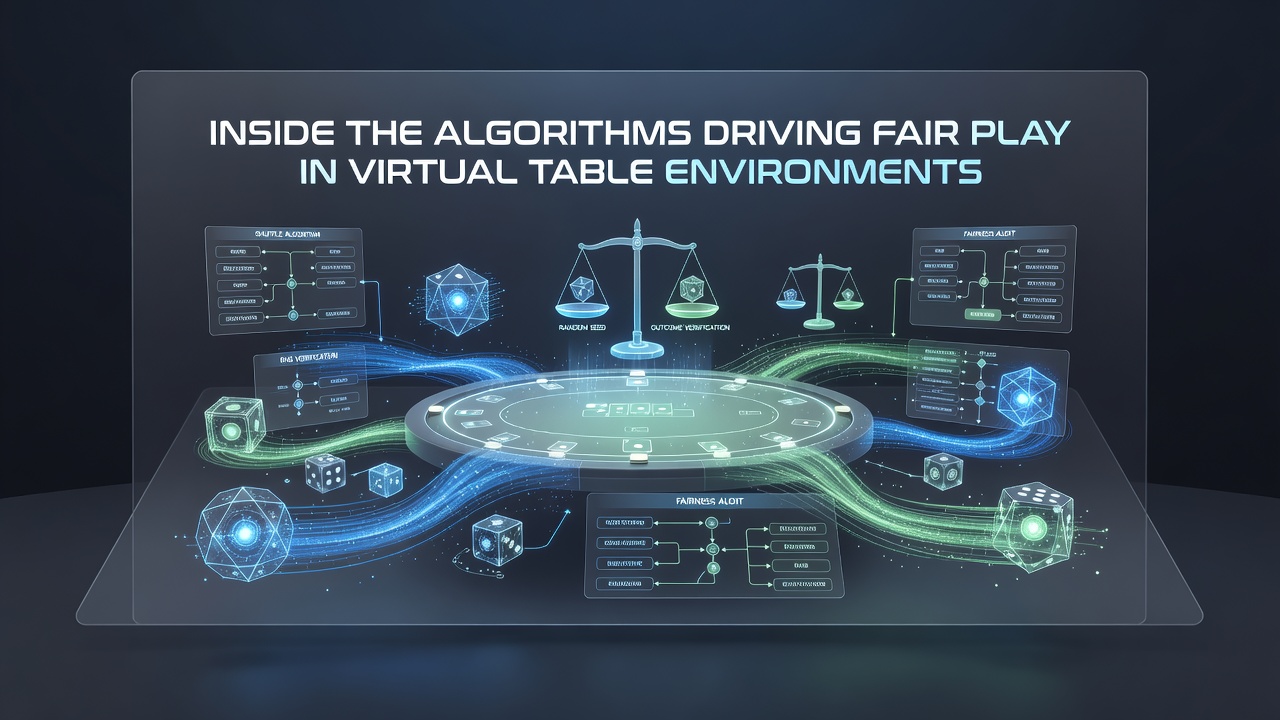
Algorithms Powering Fairness in Virtual Table Environments
Virtual table environments rely on sophisticated algorithms to deliver consistent and verifiable outcomes across games such as blackjack, roulette and poker, and those systems have evolved considerably since the early days of online platforms. Software developers integrate pseudorandom number generators with cryptographic hashing techniques so that each card draw, wheel spin or dice roll meets statistical standards set by regulatory bodies in multiple jurisdictions.
Core Components of Random Number Generation
Modern platforms employ linear congruential generators or Mersenne Twister algorithms as foundational layers, yet these alone fall short without additional entropy sources drawn from hardware events or external noise. Engineers combine those base functions with cryptographic post-processing steps that scramble output sequences and prevent pattern prediction, while independent testing laboratories verify the resulting distributions against chi-square and other statistical tests. Data collected over millions of simulated rounds show that properly tuned systems maintain deviation rates well below acceptable thresholds established by oversight agencies.
Cryptographic Techniques for Provable Fairness
Provably fair protocols allow players to confirm that results have not been altered after bets are placed, and these methods typically involve server seeds combined with client seeds through hash functions such as SHA-256. A player receives an encrypted hash of the server seed before play begins, then reveals the seed afterward so that anyone can recompute the sequence and match it against the displayed outcome. Observers note that this transparency layer has gained traction in regions outside traditional regulatory frameworks, including certain Australian and Canadian markets where operators publish open-source verification tools.
Certification Standards and Ongoing Audits
Regulatory frameworks in Nevada and several European Union member states require periodic audits that examine both the algorithm implementation and the surrounding server infrastructure. Testing firms examine source code, run extensive simulation suites and confirm that return-to-player percentages align with published figures, and reports issued after each review cycle document compliance or flag areas for remediation. In August 2026, updated technical bulletins from the Nevada Gaming Control Board introduced stricter requirements for entropy collection in virtual environments, prompting developers to integrate additional hardware random sources into existing stacks.

Those who've examined audit summaries from multiple years observe that early discrepancies often stemmed from implementation errors rather than deliberate manipulation, and subsequent code reviews have reduced such incidents. Industry reports from organizations such as the Nevada Gaming Control Board detail how continuous monitoring systems flag statistical anomalies in real time, allowing operators to pause games until engineers complete root-cause analysis.
Integration with Game Logic and Player Interfaces
Table game algorithms do not operate in isolation; they interface directly with game engines that enforce rules, track player actions and calculate payouts. Developers embed checksums and digital signatures at each stage so that any tampering attempt breaks the verification chain and triggers alerts. Research conducted at institutions focused on applied cryptography demonstrates that layered verification reduces successful attack surfaces, particularly when operators deploy multi-party computation methods that distribute trust across several independent nodes.
What's interesting is how these same verification layers support responsible gaming features, because accurate outcome tracking enables precise session logging and limit enforcement without introducing bias into the random sequences themselves. Figures from academic studies on digital gaming infrastructure reveal that platforms maintaining open audit trails experience fewer disputes over result integrity, and that pattern holds across different regulatory environments.
Emerging Developments in Algorithmic Oversight
Advances in quantum-resistant cryptography are beginning to influence virtual table systems, because future hardware may render current hash functions vulnerable to brute-force attacks. Research teams at several universities have published papers exploring lattice-based alternatives that maintain verification speed while resisting quantum threats, and early adopters in licensed markets have started pilot implementations. Meanwhile, machine-learning models assist auditors by scanning historical outcome data for subtle clustering that traditional statistical tests might miss, although human reviewers still make final compliance determinations.
One study revealed that combining classical statistical methods with neural network anomaly detection improved detection rates of simulated bias injection by more than 30 percent, according to findings presented at international gaming technology conferences. Those results suggest continued refinement rather than wholesale replacement of existing frameworks.
Conclusion
Algorithms that drive fairness in virtual table environments combine established random number techniques with cryptographic verification and rigorous third-party oversight, and ongoing regulatory updates such as those scheduled for 2026 continue to shape implementation standards. External sources including the iTech Labs certification reports provide additional documentation of how these systems perform under sustained operational loads. The resulting infrastructure supports transparent, reproducible outcomes that meet requirements across diverse licensing jurisdictions.